
Becoming a Qualified Medical Evaluator is only the first step. Understanding how to maintain QME certification in California is essential for physicians who want to continue practicing in the medical-legal system without interruption. Certification is not permanent — it requires ongoing compliance with renewal timelines, continuing education standards, and administrative obligations set by the state.
The renewal process is overseen by the California Division of Workers’ Compensation Medical Unit, which establishes the rules governing eligibility and reappointment. Physicians who fail to meet deadlines or education requirements risk losing panel eligibility and case assignments.
This guide explains the QME certification renewal process in California, including timelines, continuing education, application requirements, and practical strategies to maintain uninterrupted status.
How Often Do QMEs Renew Certification?
One of the most common questions is: how often do QMEs renew certification? In California, QME appointments are typically valid for two years. Physicians must complete the renewal process before the expiration date to maintain QME status California without lapse.
The California QME renewal deadline is firm. Missing it may require reinstatement procedures rather than simple renewal. The renewal notice is typically issued in advance by the DWC Medical Unit, but responsibility ultimately rests with the physician.
The formal California Division of Workers’ Compensation QME renewal system requires active monitoring of expiration dates. Physicians who manage high case volumes should integrate certification tracking into their operational workflow.
For those early in their QME career, understanding renewal cycles complements foundational knowledge gained during QME exam preparation, ensuring long-term compliance beyond initial certification.
QME Continuing Education Requirements California
Maintaining certification requires satisfying the state’s QME continuing education requirements California. Physicians must complete mandatory educational credits within each renewal cycle to remain eligible for reappointment.
The QME CME requirements California typically include coursework related to medical-legal evaluation standards, impairment rating methodology, and regulatory updates. Education must meet criteria approved by the DWC Medical Unit.
These requirements reflect evolving QME recertification requirements California, ensuring evaluators stay current with changes in workers’ compensation law and reporting standards. Continuing education is not merely a formality — it directly impacts report defensibility and credibility.
Physicians who consistently review structured compliance guidance, including report standards, are better positioned to meet renewal expectations.
Failing to complete required education before renewal can delay or jeopardize certification.
The QME Certification Renewal Process
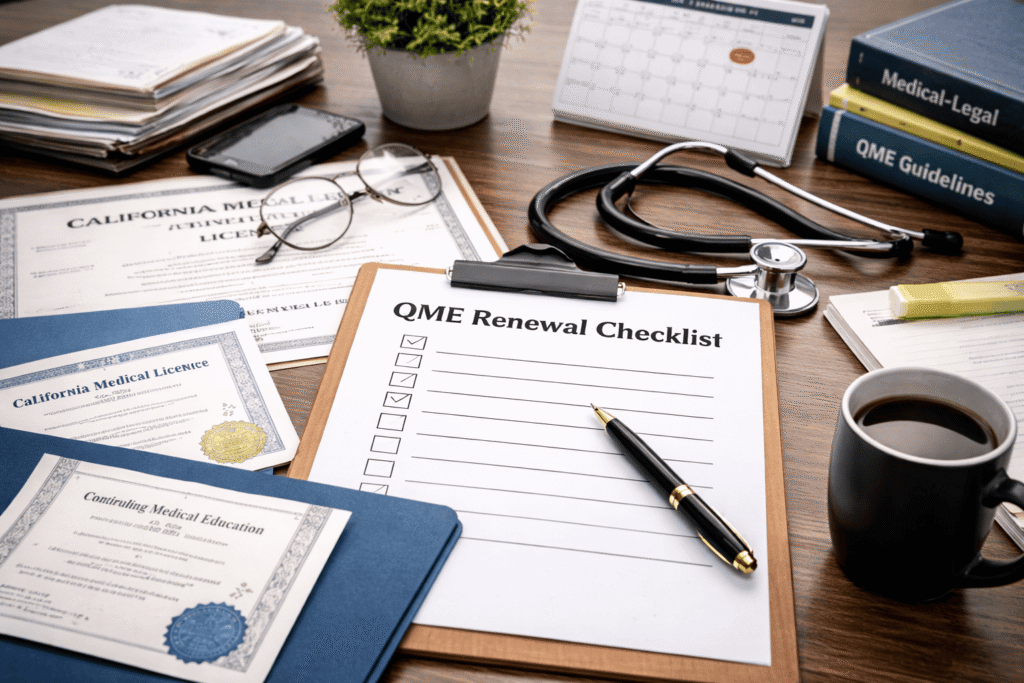
The QME certification renewal process involves submitting documentation that confirms compliance with education and licensing requirements. Physicians must complete a formal QME reappointment application California before the expiration date.
The renewal packet typically requires:
- Verification of active medical license
- Proof of completed CME hours
- Updated contact and practice information
- Payment of applicable fees
The QME Medical Unit renewal requirements may also include attestations regarding professional standing and disciplinary history.
Renewal is more than administrative paperwork. Accuracy and timeliness are critical to prevent temporary suspension from panel eligibility.
Physicians who rely on structured workflow systems or administrative coordination — similar to broader QME practice management California models — often experience fewer renewal disruptions.
Avoiding Common Renewal Mistakes
Several preventable errors can interrupt certification status. These include:
- Missing the California QME renewal deadline
- Submitting incomplete CME documentation
- Failing to update practice address information
- Overlooking regulatory changes
Physicians who treat renewal as a last-minute administrative task risk unnecessary stress and panel suspension.
Proactive planning is essential. Setting reminders six months before expiration and maintaining organized CME documentation throughout the cycle reduces compliance risk.
For physicians balancing clinical practice with medical-legal work, maintaining structured administrative oversight can be as important as producing defensible reports. Strong documentation habits also support broader professional stability.
Long-Term Strategy to Maintain QME Status in California
Maintaining certification is not simply about meeting minimum requirements. It is about building sustainable professional credibility within the workers’ compensation system.
Physicians who consistently comply with QME recertification requirements in California, complete continuing education early, and monitor regulatory updates maintain uninterrupted eligibility and stronger reputational standing.
Long-term success requires integrating renewal tracking into practice management systems, staying informed through DWC communications, and maintaining professional standards in evaluation and reporting.
By understanding the full scope of how to maintain QME certification in California, physicians protect both their eligibility and the financial stability of their medical-legal practice.